Keeping your knives sharp is important, whether you use them in the kitchen, workshop, or outdoors. However, getting a consistent edge with a traditional sharpening stone takes practice. You need to maintain the correct angle throughout the process, and even a small mistake can affect the final result. You need to choose the best guided knife sharpening system for good results.
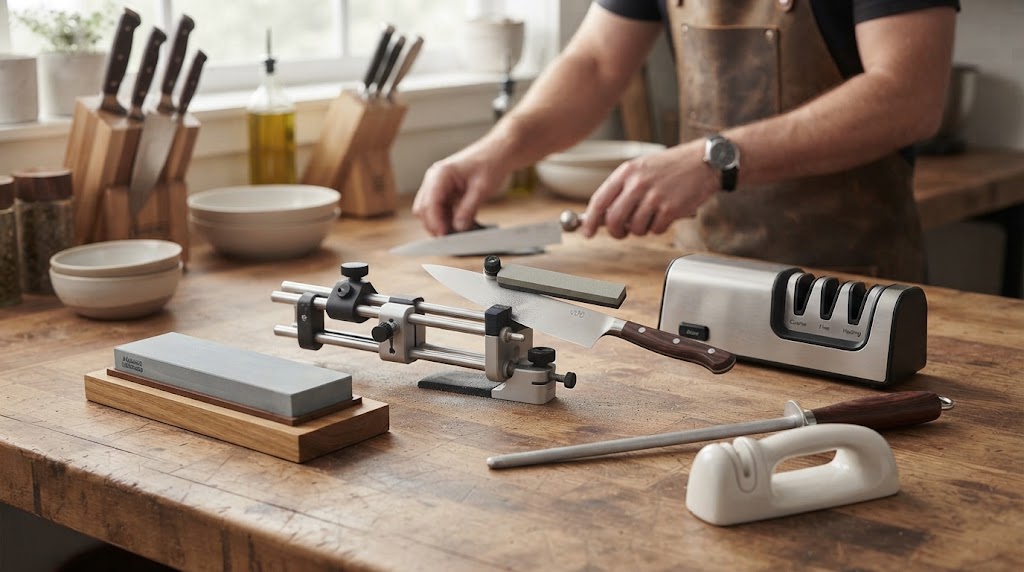
Unlike ordinary sharpening stones, these systems help you maintain a consistent sharpening angle. They make the process easier to control, especially if you are still learning how to sharpen knives. Some models use a clamp to hold the blade while an abrasive stone moves along a guide rod. Others use adjustable arms and different sharpening plates to give you more control over the edge.
There are several options available, from affordable kits for home use to more advanced systems designed for regular professional sharpening. In this guide, we look at what matters when choosing one and some models worth considering.
What Is a Guided Knife Sharpening System?
A guided knife sharpening system is a tool designed to help you sharpen a blade at a controlled angle. Most models hold the knife in a clamp or fixed position while guiding an abrasive stone along the cutting edge.
The main advantage is consistency. When sharpening freehand, maintaining the same angle from the heel to the tip can be difficult. A guided system reduces this problem by controlling the movement of the abrasive or holding the blade at a selected angle.
Most systems come with several abrasive stones or plates. Coarse abrasives help restore damaged or very dull edges, while finer options refine and polish the cutting edge.
These systems are suitable for many types of knives, including kitchen knives, pocket knives, hunting knives and some outdoor tools. However, not every model can accommodate every blade size or shape, so check the manufacturer’s specifications before buying.
What to Look for Before Buying
The best guided knife sharpening system should match the knives you own and the amount of sharpening you expect to do. A beginner maintaining a few kitchen knives does not necessarily need an expensive professional setup.
Adjustable sharpening angles
Angle adjustment is one of the most important features. Different knives are designed with different edge angles. Many Western kitchen knives use angles around 15 to 20 degrees per side, while some Japanese knives have narrower edges.
A system with adjustable angles gives you more flexibility when working with different knives. Some models offer preset positions, while others allow finer adjustments.
Abrasive options
Look at the sharpening stones or plates included in the package. Diamond plates are useful for removing metal and restoring dull edges. Ceramic abrasives and finer stones help refine the edge, while leather strops can provide a final polish.
A system with several stages gives you more control, but you should not assume that having more stones automatically makes it better.
Clamping and stability
The knife should remain secure while you sharpen it. A weak clamp can allow the blade to move, making it harder to maintain a consistent angle. A stable base is also important because it gives you better control over the sharpening process.
Blade compatibility
Check the maximum blade length, thickness and shape supported by the system. Some compact sharpeners work well with pocket knives but may be awkward to use with large chef’s knives. If you mainly sharpen kitchen knives, choose a model that can accommodate their size.
The Best Knife Sharpening Guided Systems
The following models are worth considering because they offer different levels of control, features and price points. Your choice should depend on the knives you sharpen and how much control you need.
1. Work Sharp Precision Adjust Knife Sharpener
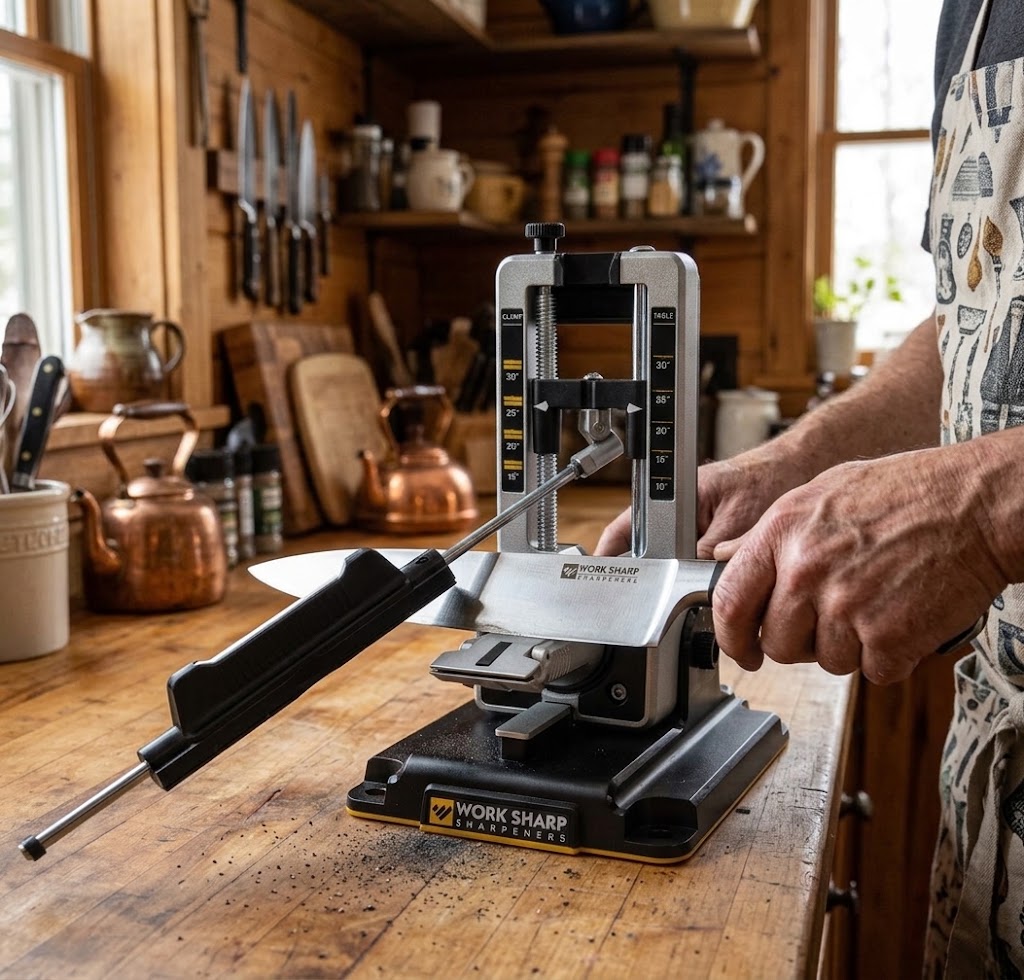
The Work Sharp Precision Adjust is a good starting point for anyone looking for a practical guided system. It uses a clamp to hold the knife and an adjustable guide to help maintain the selected sharpening angle.
Its angle range is 15 to 30 degrees, making it suitable for many common kitchen, pocket and outdoor knives. The system also uses a rotating abrasive handle with diamond and ceramic surfaces, allowing you to move between sharpening stages without handling several separate stones.
One of its main advantages is that it does not require electricity or complicated setup. It is compact enough to store easily and offers more angle control than a basic pull-through sharpener.
It is worth considering for home users who want consistent results without spending too much on a professional setup. However, the standard kit has fewer abrasive options than the Elite version.
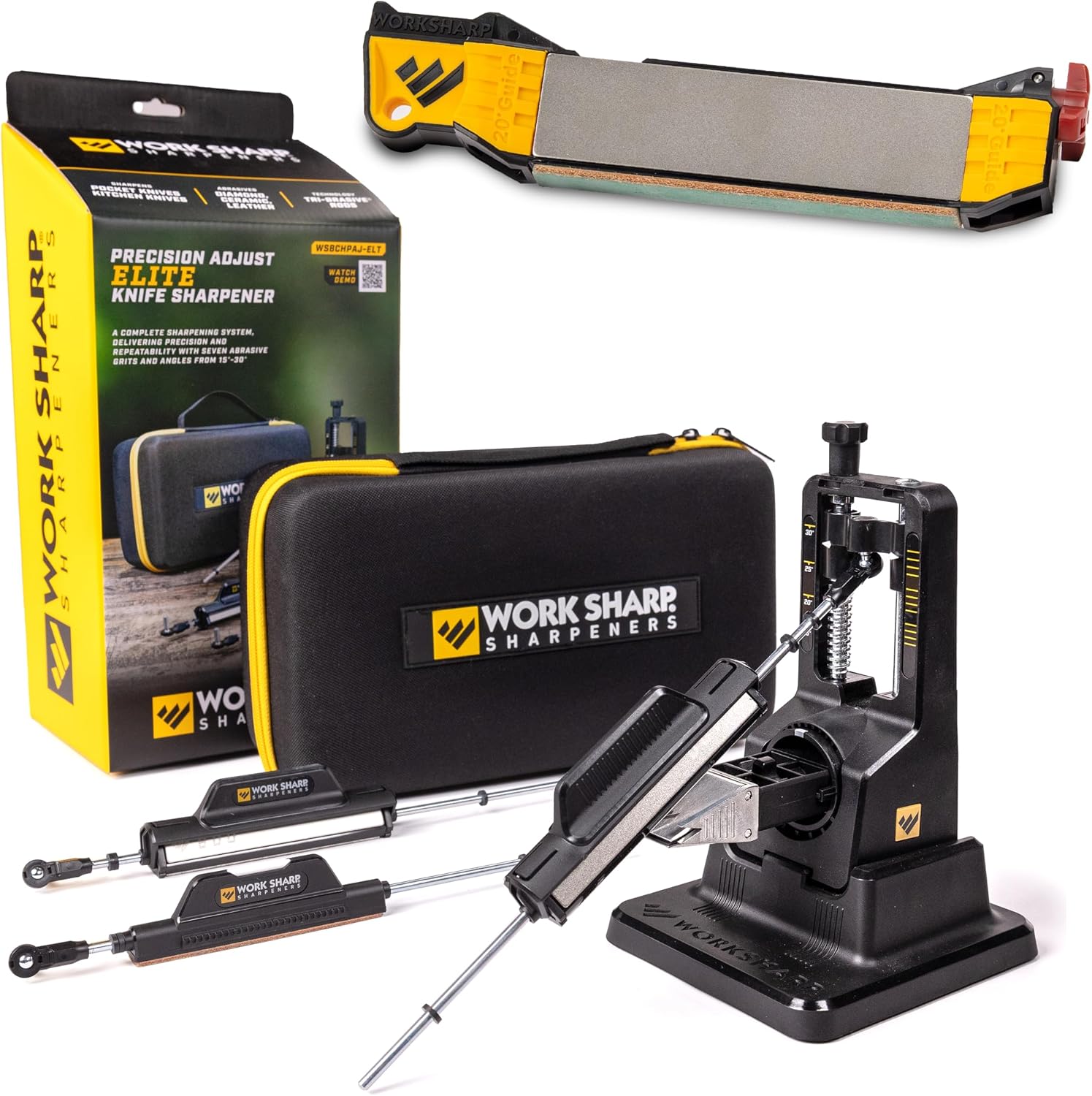
2. Work Sharp Precision Adjust Elite
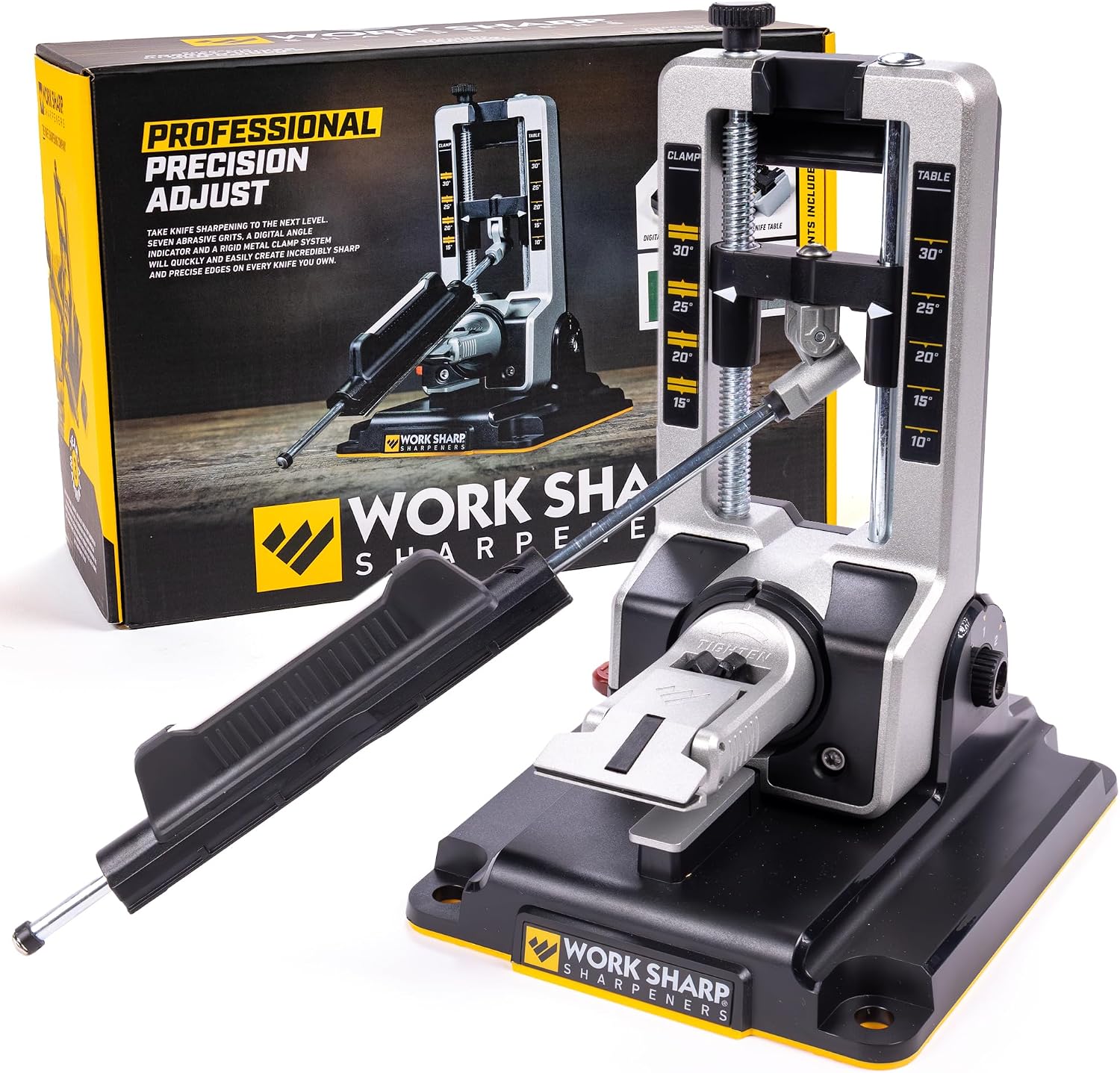
If you want more sharpening and finishing options, the Work Sharp Precision Adjust Elite is a step up from the standard model.
It uses the same basic guided sharpening design but includes a wider selection of abrasives. This gives you more flexibility when working on knives that need different levels of sharpening, from restoring an edge to refining it.
The additional accessories make it more suitable for people who sharpen several knives regularly. It also comes with a leather strop for finishing the edge.
The main consideration is cost. If you only maintain a few kitchen knives occasionally, the standard Precision Adjust may offer enough functionality. The Elite makes more sense if you want additional sharpening stages and expect to use the system frequently.
3. Lansky Deluxe 5-Stone Sharpening System
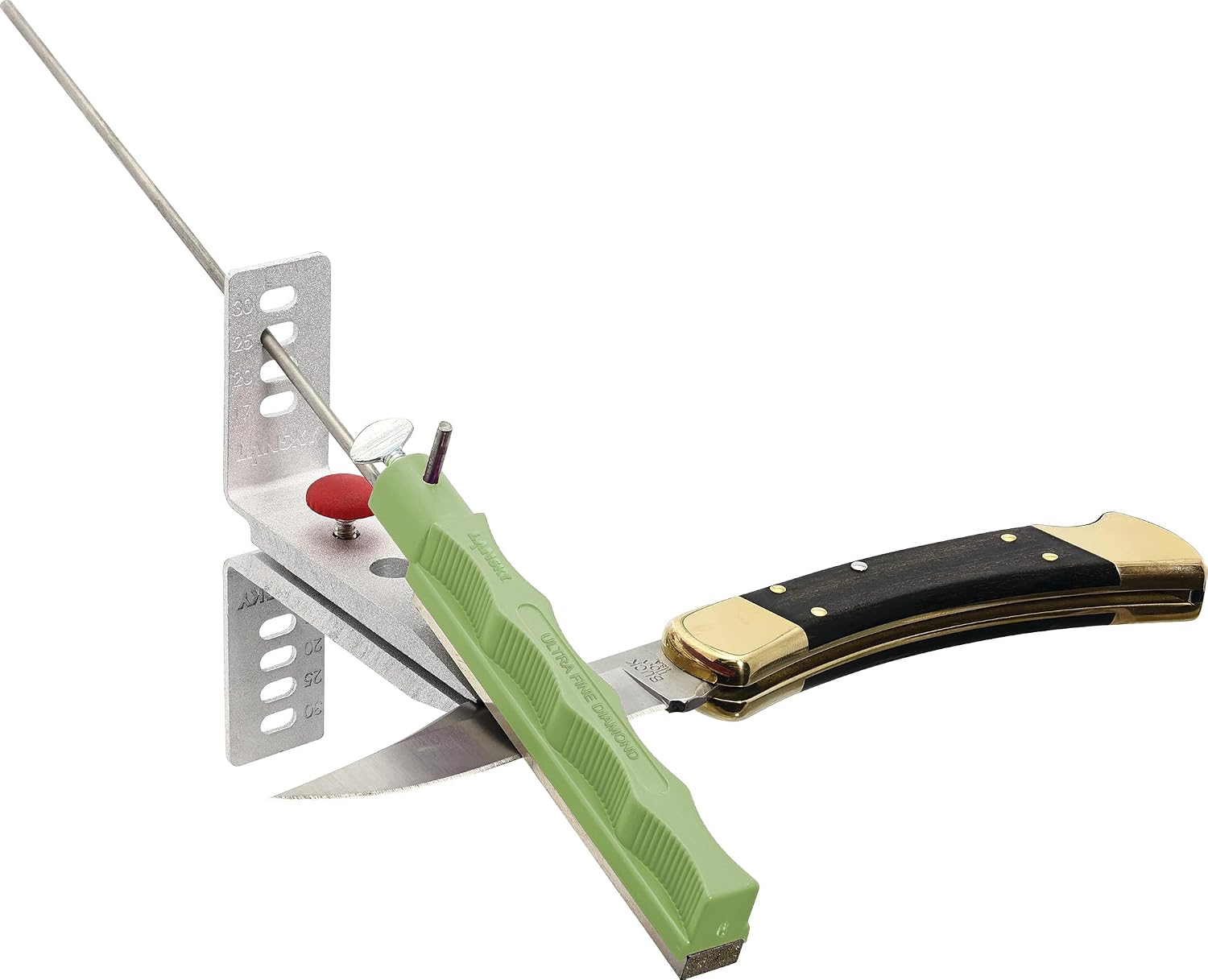
The Lansky Deluxe 5-Stone Sharpening System is a long-established option for people who prefer a traditional clamp-and-rod design.
It holds the knife in a clamp while a guide rod controls the angle of the sharpening stone. The kit includes five sharpening hones with different levels of abrasiveness, giving you several stages to work through depending on the condition of the blade.
One advantage is its relatively simple design. You can select a preset angle and work through the stones without needing to learn freehand sharpening techniques.
It is particularly suitable for pocket knives, hunting knives and smaller blades. However, the clamp may be less convenient when working with some larger kitchen knives. Check the blade dimensions before purchasing if you intend to use it mainly for chef’s knives.
4. SHARPAL 202H Precision Knife Sharpening System
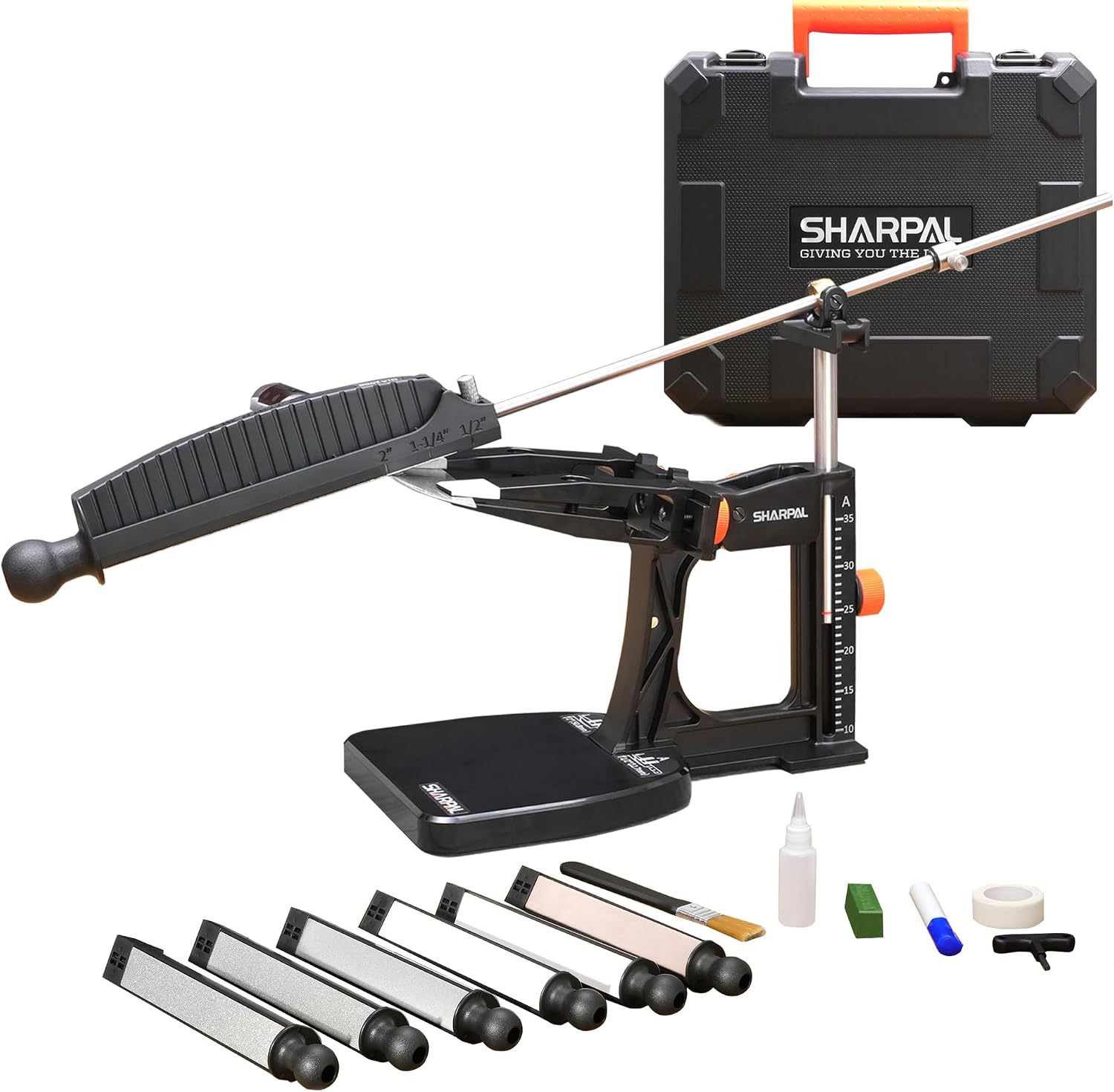
The SHARPAL 202H is worth considering if you want a wider range of sharpening angles and abrasive options.
It offers an adjustable angle range of 10 to 35 degrees and includes different abrasive surfaces for sharpening and finishing. This makes it useful for people who maintain several types of knives and need more flexibility than a system with only a few preset angles.
Its wider adjustment range is particularly useful when working with knives that have different edge designs. The system is also designed to provide a stable sharpening setup.
However, its additional features may be unnecessary if you only sharpen standard kitchen knives. It is better suited to someone who wants more control and expects to work with a varied knife collection.
Choosing the Best Professional Knife Sharpening System
For regular sharpening work, durability and repeatability become more important. A professional user may sharpen several knives in one session, so a system needs to remain stable and provide consistent results over time.
The Work Sharp Professional Precision Adjust is one option worth considering. It builds on the guided design of the standard Precision Adjust range, with a more substantial setup intended for regular use.
The KME Precision Knife Sharpening System is another premium option. It uses a clamp and guided rod to maintain a controlled angle while you work through different abrasive stones. It is particularly suited to people who want precise control over individual blades.
When choosing the best professional knife sharpening system, consider how frequently you will use it, the range of knives you handle and whether replacement abrasives are easy to find. A more expensive system can be worthwhile if you sharpen regularly, but it may be unnecessary for occasional household maintenance.
A Guided Knife Sharpening System is a useful investment if you want better control over the sharpening process. It helps maintain consistent angles and reduces some of the difficulty associated with freehand sharpening.
The Work Sharp Precision Adjust is a sensible option for most home users, while the Elite offers more finishing choices. Lansky is worth considering if you prefer a traditional clamp-and-rod setup, and the SHARPAL 202H provides a wider range of angle adjustments.
Before choosing, consider your knives, sharpening needs and budget. The right system is not necessarily the most expensive one. It is the one that fits your blades, gives you enough control and makes regular knife maintenance easier.