A good knife sharpening rod is one of the simplest tools you can keep in your kitchen. It helps maintain your knives between sharpening sessions, keeps the cutting edge in better condition and makes everyday food preparation easier. Whether you cook at home or work in a professional kitchen, choosing the best ceramic knife sharpening rods can help your knives perform consistently for longer.
Not every knife sharpening rod works in the same way. Some are made from traditional steel, while others use ceramic or diamond-coated surfaces. These materials have different levels of abrasion and are suited to different knives. Choosing the wrong one can leave you wondering why your knife is still dull or, in some cases, cause unnecessary wear to the edge.
In this guide, we cover what to look for when buying a knife sharpening rod, including the best ceramic knife sharpening rods, how to choose between steel and ceramic, and what separates a useful everyday tool from one that may not suit your knives.
What Does a Knife Sharpening Rod Actually Do?
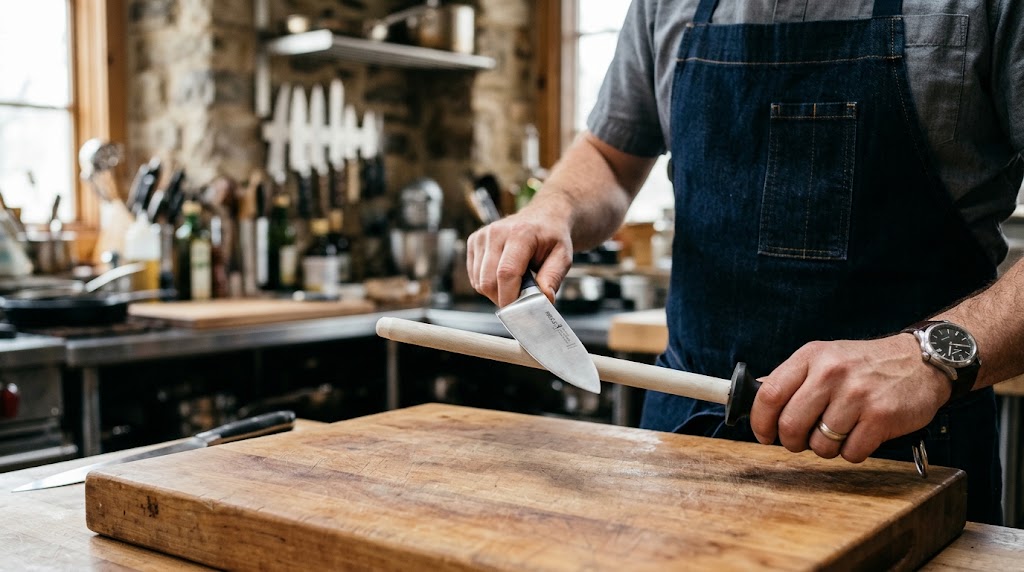
A knife sharpening rod is a long, narrow tool used to maintain a knife’s cutting edge. It usually has a handle for a secure grip and a rod made from steel, ceramic or another abrasive material.
One important thing to understand is that a traditional steel honing rod does not sharpen a completely dull knife. Instead, it helps maintain an existing edge. During normal cutting, the very thin edge of a knife can become misaligned or develop small imperfections. Running the blade along a suitable rod helps restore its cutting performance.
Ceramic and diamond rods work a little differently. Their surfaces are abrasive and remove a small amount of metal while refining the edge. This means they can do more than a smooth traditional steel rod, although they are still not a replacement for proper sharpening when a blade has become seriously dull.
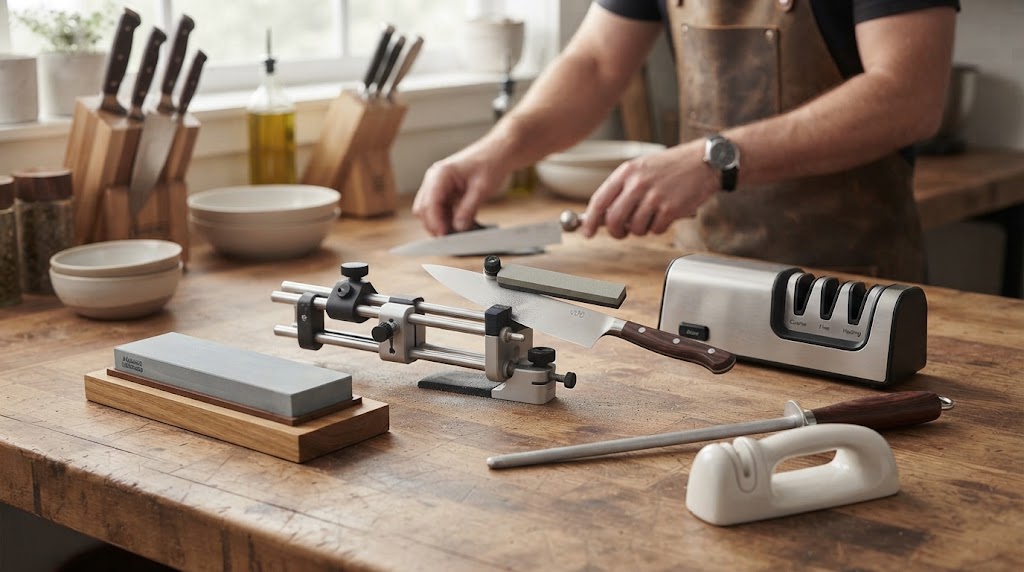
If your knife has lost its sharpness completely, a whetstone or a proper knife sharpener may be necessary. A rod is mainly useful for regular maintenance between those sharpening sessions.
Different Types of Knife Sharpening Rods
Before choosing the best knife sharpening rod, consider the material used to make it. This is one of the most important factors because it determines how the rod interacts with your knife.
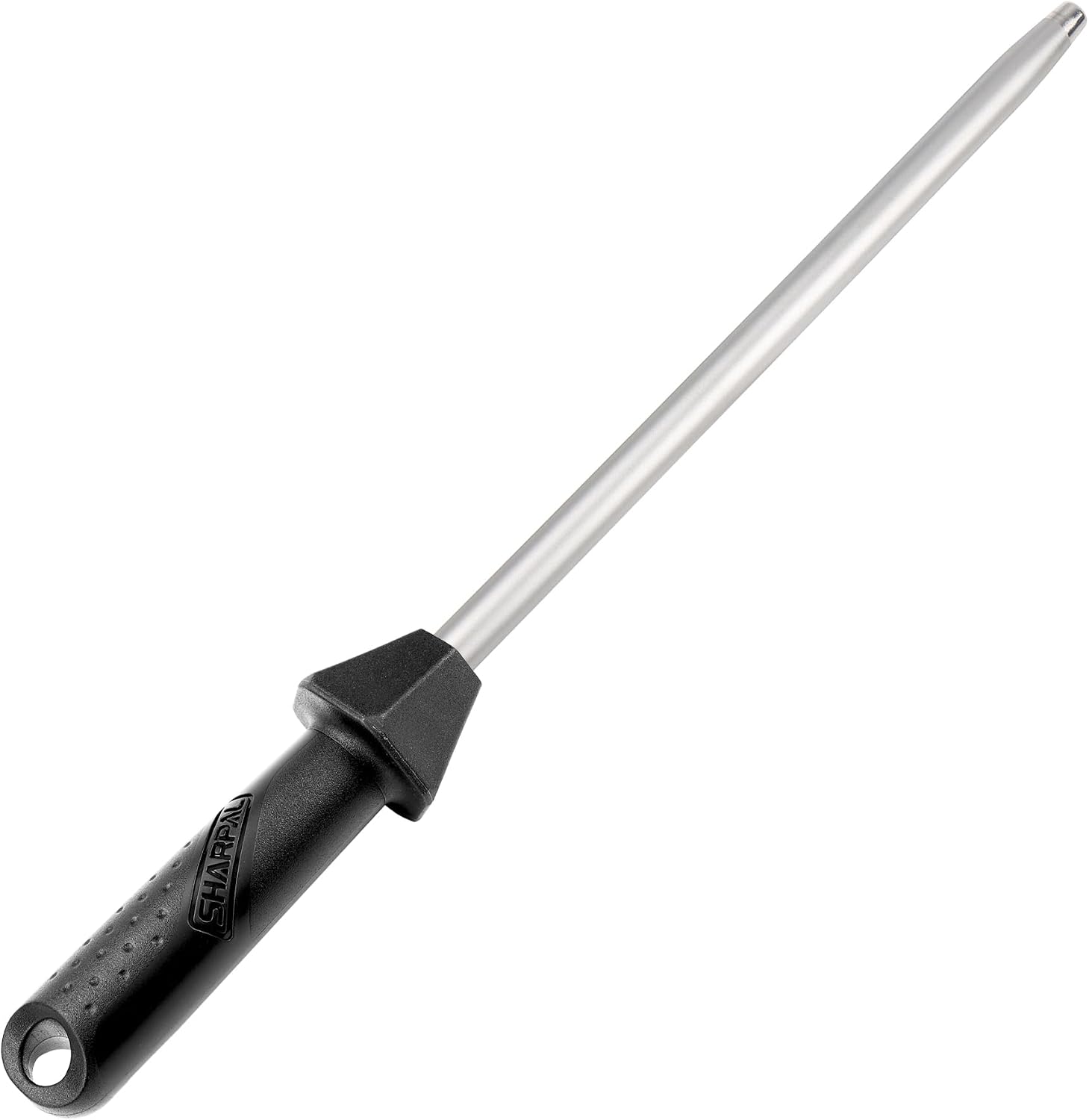
Traditional steel rods are commonly found in kitchen knife sets and professional kitchens. They are generally made from hardened steel and may have a smooth or finely grooved surface.
They are particularly useful for maintaining many Western-style kitchen knives, including common German knives. They are also popular among chefs and butchers who need to maintain their knife edges throughout the working day.
A steel rod is a practical choice if you want something durable for frequent use. Unlike ceramic, it is less likely to break if accidentally knocked against a hard surface. However, the rod must be suitable for the hardness of your knife. Some harder Japanese knives are better maintained with ceramic because a traditional steel rod may not work as effectively.
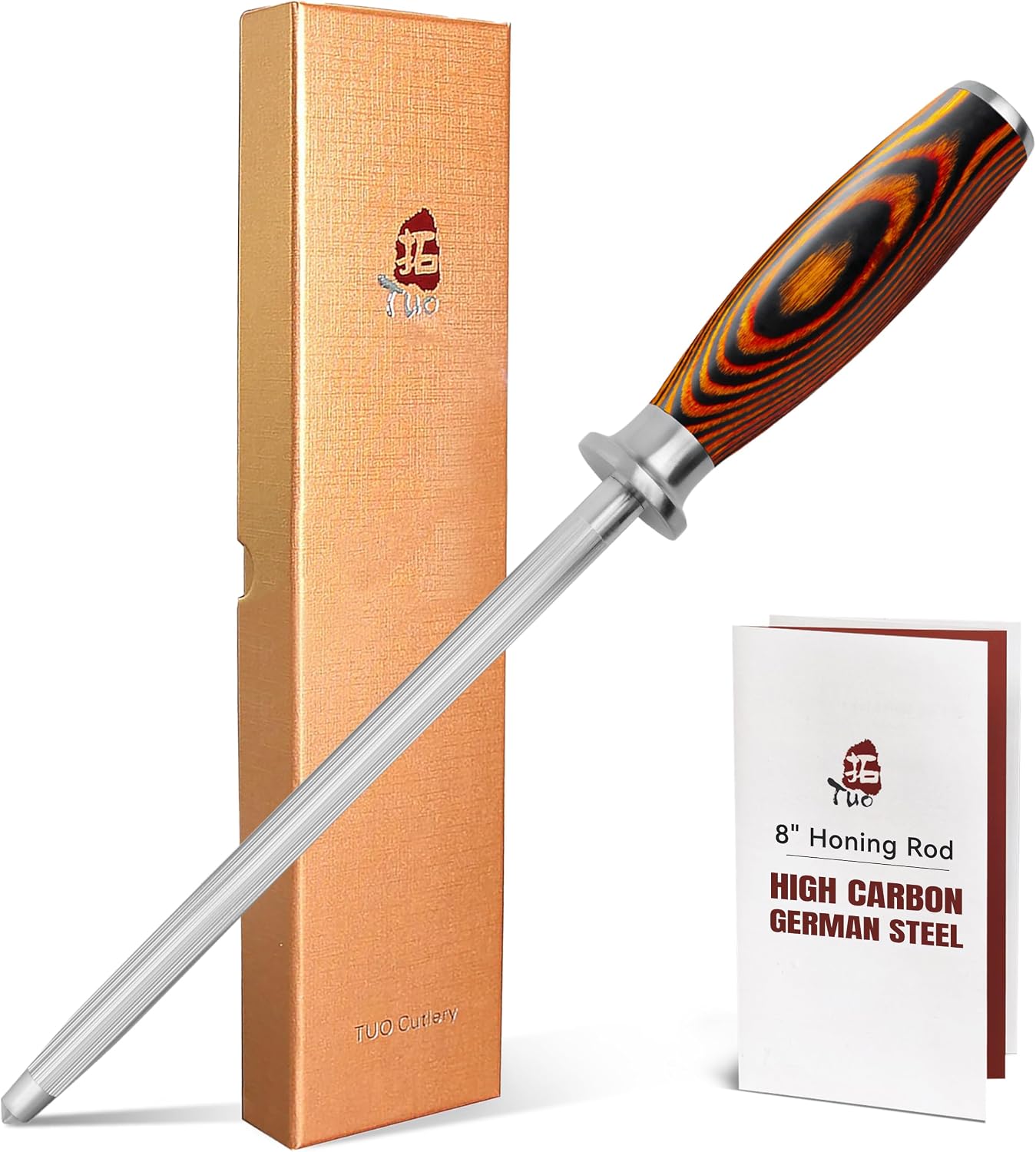
A great example of a traditional honing rod is TUO Honing Rod knife Sharpener Rod, which is popular for daily kitchen honing maintenance.
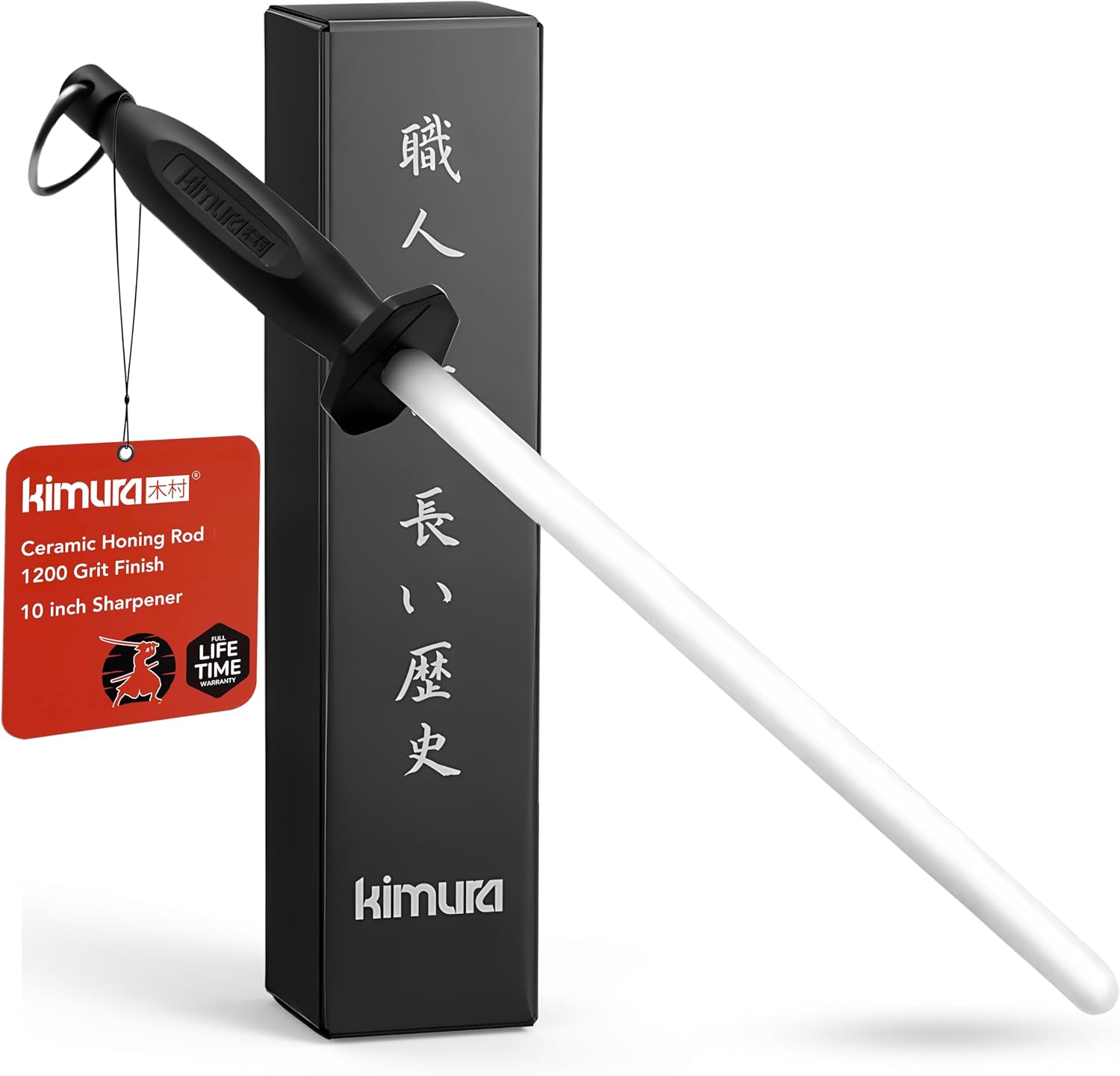
A ceramic rod has a hard abrasive surface that gently removes a small amount of metal as you pass the knife along it. Many of the best ceramic knife sharpening rods use this abrasive action to refresh an edge that needs more than simple realignment.
Ceramic rods are particularly useful for many Japanese kitchen knives, which often have harder steel than traditional Western knives. They can also work well in kitchens with a mixture of different knife types.
One popular example is the Messermeister 12-inch 1200-grit ceramic sharpening rod. Its manufacturer specifies a fine ceramic abrasive, a solid core and a handle designed for comfortable use.
The main disadvantage is that ceramic is more brittle than steel. Dropping it or knocking it against a hard counter can cause it to chip or break. It also needs to be handled and stored carefully.
Diamond-coated rods have an abrasive surface that removes metal more aggressively than many traditional steel or fine ceramic rods. They are useful when a knife needs more attention than ordinary honing can provide.
However, this also means you should not use one carelessly every day. Excessive use can remove more material than necessary and gradually change the knife’s edge.
A diamond rod can be useful for occasional edge restoration, but it is not automatically the best choice for someone who simply wants to maintain a sharp kitchen knife.
How to Choose the Right Rod for Your Knives
Choosing among the best ceramic knife sharpening rods depends on the knives you own and how frequently you use them. A professional butcher maintaining several knives throughout a shift may need something different from a home cook who prepares dinner a few times a week.
Start by checking the type of steel used in your knives. Many Western kitchen knives use relatively softer steel and can be maintained with a suitable traditional honing steel. Harder Japanese knives often benefit from a fine ceramic rod because of its abrasive properties.
You should also consider the length. A rod should be long enough to accommodate the blade you intend to maintain. A longer rod makes it easier to work with larger chef’s knives and slicing knives without awkward movements. For smaller kitchen knives, a shorter option may be sufficient.
The handle is another detail worth checking. It should feel secure and comfortable, especially if you expect to use the tool regularly. A finger guard can also provide additional protection by keeping your hand away from the blade.
Finally, consider how much maintenance the rod requires. Steel rods are generally straightforward to care for, while ceramic rods need more careful handling. A good choice is one that suits your knives and your normal kitchen routine.
The Best Ceramic Knife Sharpening Rods
When comparing the best ceramic knife sharpening rods, consider the material, length, construction and intended use rather than simply choosing the cheapest option. The following models are worth looking for.
1. Victorinox 10-Inch Sharpening Steel
The Victorinox 10-inch sharpening steel is worth considering if you mainly use standard Western kitchen knives. Victorinox makes professional and household knife accessories, and its steel rods are designed for regular edge maintenance.
The 10-inch size is practical for smaller and medium-sized kitchen knives. It is also a sensible option for someone who wants a straightforward steel rod without moving into more specialised ceramic or diamond products.
It is particularly worth considering for cooks who already own Victorinox knives or other Western-style blades. Before buying, check the exact model number because Victorinox sells different sharpening steels in different lengths.

2. Messermeister 12-Inch Ceramic Sharpening Rod
If you prefer ceramic, the Messermeister 12-inch 1200-grit ceramic sharpening rod is an option to consider. Its fine abrasive surface is designed for regular edge maintenance and polishing.
The 12-inch length provides a generous working area for larger kitchen knives. It is particularly worth considering if you own harder Japanese-style blades or want a ceramic rod for maintaining different knives in your kitchen.
Its main drawback is the nature of ceramic itself. It needs more careful handling than a steel rod, so it may not be the best choice for a busy kitchen where tools are frequently knocked around.

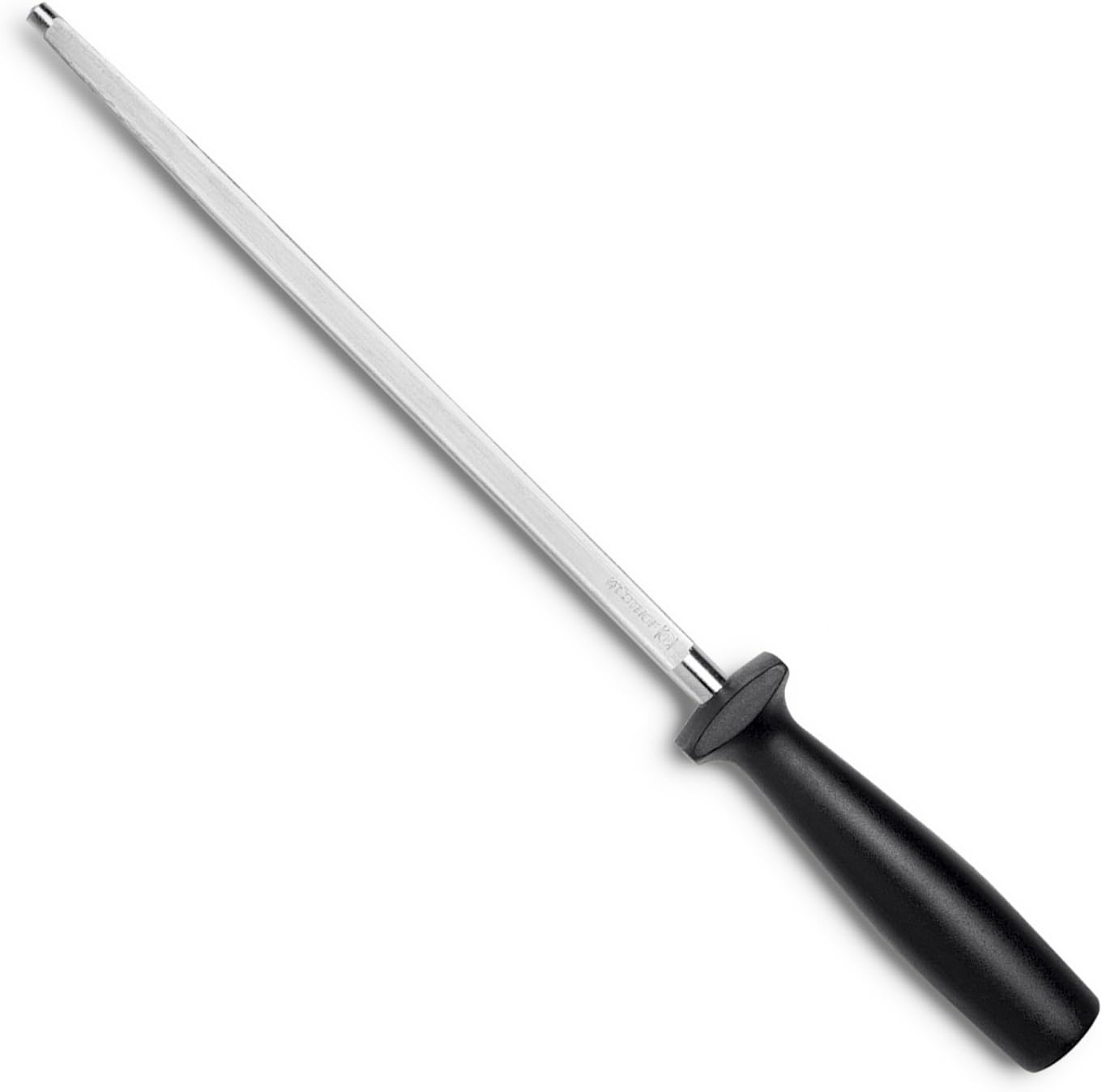
3. WÜSTHOF 9-Inch Honing Steel
WÜSTHOF is another established knife brand, and its honing steels are designed to help maintain kitchen knife edges between sharpening sessions.
A 9-inch rod is a practical size for many everyday kitchen knives. It is worth considering if you own Western-style knives and want a familiar traditional honing tool.
Before purchasing, check whether the listing is for a smooth, fine or more aggressively grooved version. These finishes do not necessarily behave in the same way, so choose according to the knives you intend to maintain.
Knife Sharpening Rod Price
The knife sharpening rod price depends on the material, brand, length and overall construction. Basic steel rods are generally more affordable than specialised ceramic or diamond-coated options. However, paying more does not automatically mean you are getting a better tool for your particular knives.
When comparing prices, look beyond the headline figure. Check the rod’s actual length, material, surface finish and whether the handle has a protective guard. Some listings also offer different sizes under the same product page, so make sure you select the correct version before ordering.
A cheaper steel rod may be perfectly suitable for maintaining everyday Western knives. On the other hand, spending more on a fine ceramic rod may make sense if you own harder Japanese knives and want a tool better suited to their edges.
Amazon prices can change depending on the seller, availability and delivery location. It is therefore better to check the current listing rather than rely on an old price shown in an article or product review.
Honing Rod vs Sharpening Steel
The terms honing rod and sharpening steel are often used interchangeably. In many cases, they refer to the same traditional steel tool used to maintain a knife’s edge.
However, the difference between honing and sharpening is important.
Honing helps maintain an existing cutting edge. It is usually performed regularly and requires only a few controlled passes along the rod. It does not recreate a badly worn or damaged edge.
Sharpening involves removing metal to create a new cutting edge. This is normally done with a whetstone, an appropriate sharpening system or another abrasive tool.
The confusion comes from the fact that ceramic and diamond rods also remove metal. They can lightly sharpen while maintaining an edge, depending on their abrasive surface. This is why it is important to understand what a product is made from instead of relying only on the name printed on its packaging.
If your knife is already sharp but does not cut as smoothly as it used to, honing may help. If it remains dull after careful honing, it probably needs proper sharpening.
The right knife sharpening rod can make everyday knife maintenance easier and help keep your kitchen knives performing well between sharpening sessions. The important thing is to choose a rod that matches the steel and condition of your knives.
Traditional steel rods are practical for maintaining many Western-style knives, while fine ceramic rods are worth considering for harder blades and more controlled edge refinement. Diamond rods offer a more abrasive option but need careful use.
Before buying, compare the length, material, handle and intended use. Check the current Amazon listing and make sure you are purchasing the exact model you need. A suitable rod, used correctly, is a simple addition that can help you get more consistent performance from your knives.