
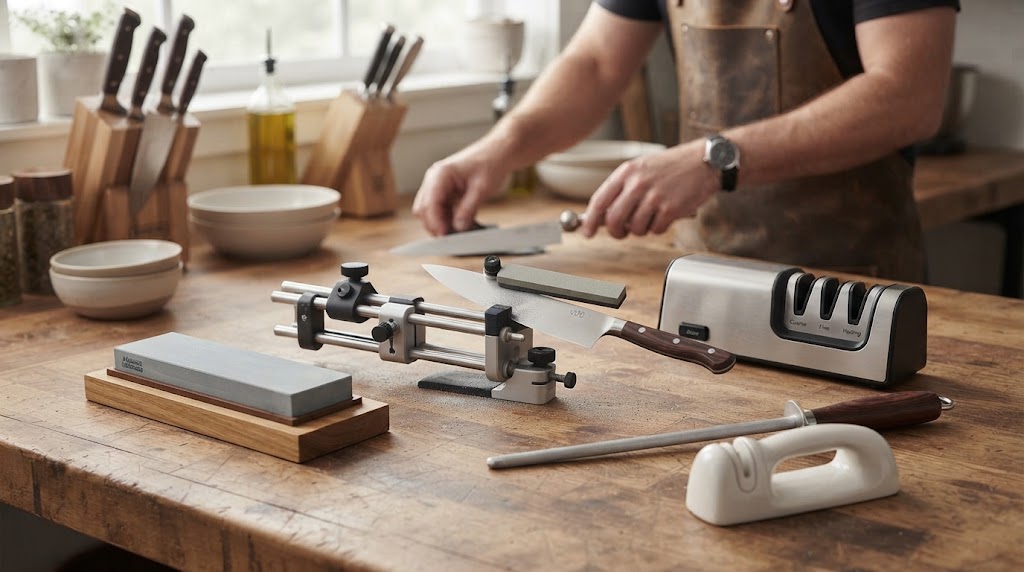
A sharp kitchen knife makes cooking easier and more enjoyable. But choosing the best kitchen knife sharpener can be confusing when you see pull-through sharpeners, whetstones, sharpening rods, and electric machines all claiming to give you a razor-sharp edge. At Knife Spine, we have spent a lot of time looking at how different sharpening tools work, how they feel in everyday use, and which ones make sense for different types of knife owners.
The truth is that there is no single kitchen knife sharpener that is perfect for everyone. The right choice depends on your knives, your sharpening experience, how often you use your knives, and how much control you want over the edge.
In this guide, we will look at the main types of kitchen knife sharpeners and explain what to consider before buying one. Our goal is simple: to help you find a sharpener that actually fits the way you use your kitchen knives.
What Makes a Good Knife Sharpening Tool?
A good sharpener should do more than simply remove metal from your knife. It should help you create a consistent edge without unnecessarily damaging the blade.
One of the first things we look at in picking the best kitchen knife sharpener. A sharpener that is easy to use but removes far too much steel every time may not be a good long-term choice. Your knife only has so much metal to work with, so aggressive sharpening should generally be reserved for blades that really need it.
You should also consider:
- How easy the sharpener is to use
- Whether it produces a consistent sharpening angle
- How much metal it removes
- The type of abrasive it uses
- Whether it works with your particular knives
- How easy it is to clean and maintain
- Whether it is suitable for beginners or experienced users
A good sharpening tool should make it easier to maintain an edge rather than turning every sharpening session into a complicated job.
Best Kitchen Knife Sharpeners
If you are searching for the best kitchen knife sharpener, you probably do not want a long explanation. You want to know which sharpeners are actually worth buying and which one makes sense for your knives.
After looking at the way different sharpening systems are designed and how they perform in real kitchen use, these are some of the models we would put on the shortlist.
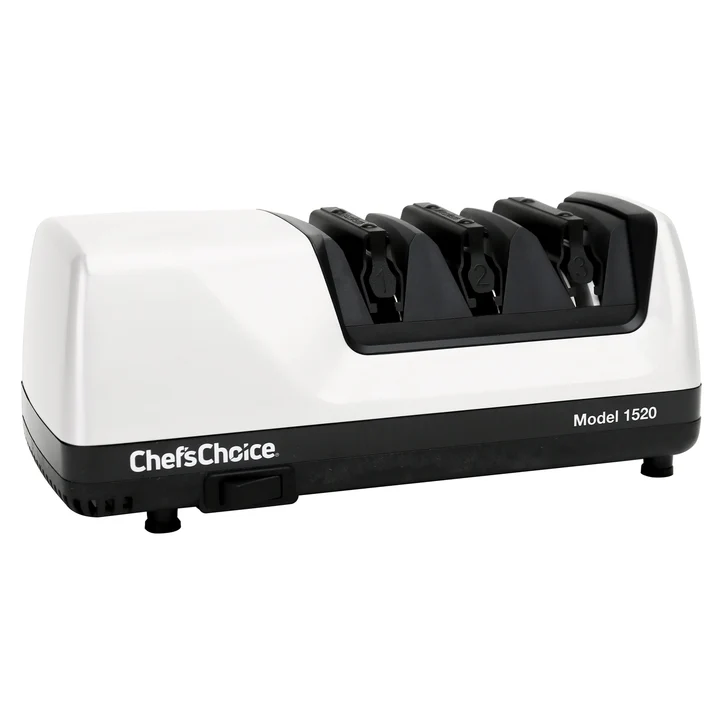
Chef’sChoice Trizor 15XV
The Chef’sChoice Trizor XV 15 is one of the easiest recommendations for a typical home kitchen. It is an electric three-stage sharpener designed around a 15-degree edge, making it particularly well suited to many modern kitchen knives.
What makes it stand out is convenience. You do not have to learn how to hold a whetstone or spend several minutes trying to maintain a perfectly consistent angle. The guided slots do most of that work for you. One of the many reasons it is considered one of the best kitchen knife sharpeners.
Consumer Reports’ 2026 testing named the Chef’sChoice Model 15XV its top overall knife sharpener, noting that it consistently maintained the intended angle across the knives tested.
Best for: Home cooks who want fast, consistent sharpening without learning a complicated technique.
Why we like it: It is easy to use and produces repeatable results.
Keep in mind: A powered sharpener is not the best choice if you want maximum control over how much steel is removed. You should also make sure the 15-degree edge is appropriate for your particular knife.
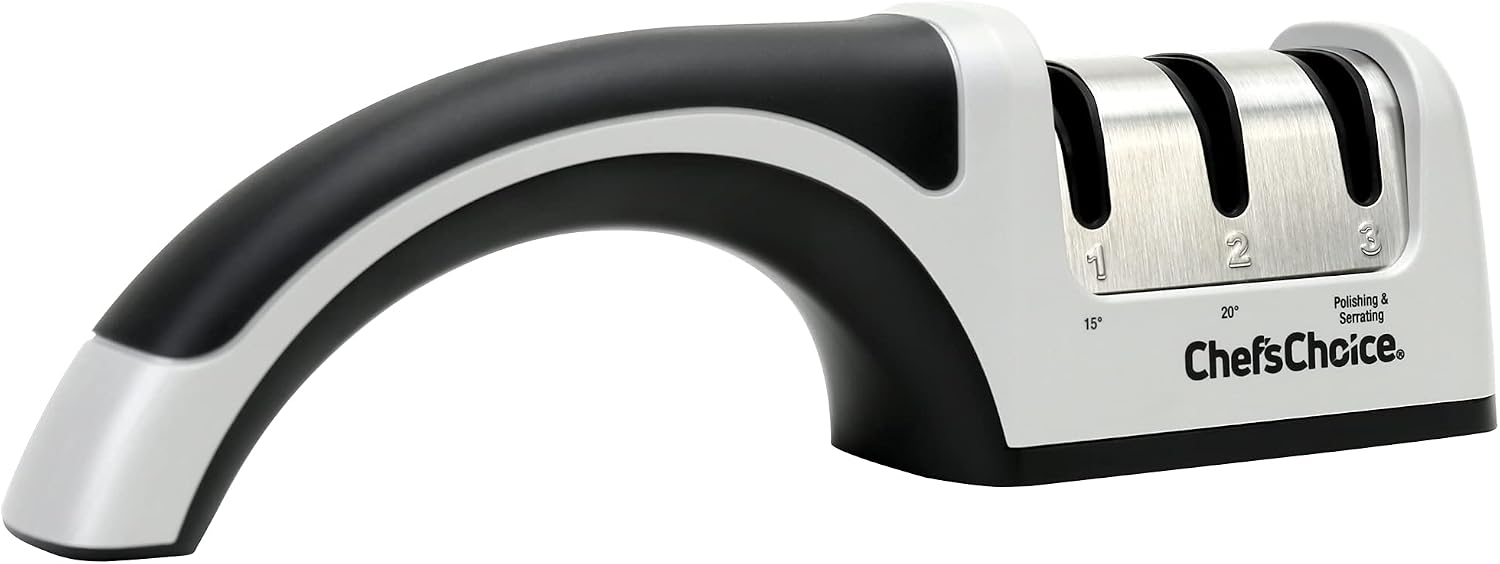
Chef’sChoice 4643 ProntoPro
If you do not want an electric machine, the Chef’sChoice 4643 ProntoPro is one of the manual sharpeners we would consider first.
This model is particularly useful because it gives you both 15-degree and 20-degree sharpening options, along with a third stage for refining the edge. That makes it more flexible than many inexpensive pull-through sharpeners that give you only one fixed angle.
Consumer Reports’ recent testing placed the 4643 at the top of its manual-sharpener category.
The 15-degree setting makes sense for many thinner-edged kitchen knives, while the 20-degree setting is useful for knives that need a more durable edge. The important thing is to choose the setting that matches your knife rather than assuming 15 degrees is always better.
Best for: Home cooks who want a simple manual sharpener with more flexibility than a basic one-slot model.
Why we like it: No electricity, compact design, two sharpening angles, and a relatively straightforward learning curve.
Keep in mind: Pull-through sharpeners are convenient, but they do not give you the same level of control as a good whetstone or guided sharpening system.
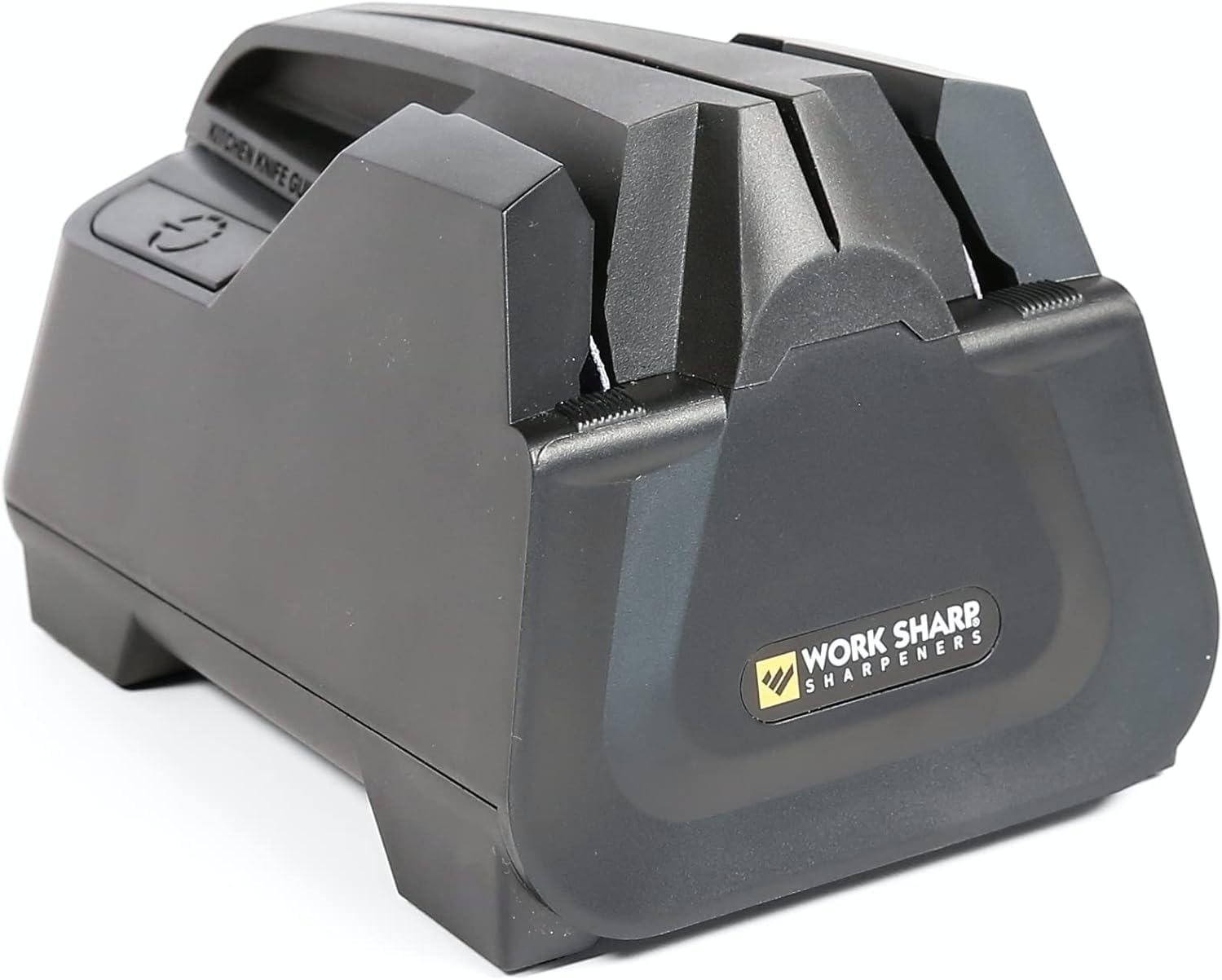
Work Sharp Culinary E2
If you want an electric sharpener without spending as much as you would on a premium machine, the Work Sharp Culinary E2 is worth looking at.
It is designed specifically for kitchen knives rather than being a general-purpose sharpening machine. That makes it a practical choice for someone who simply wants to keep their everyday chef’s knife, paring knife, and other kitchen blades sharp.
Bon Appétit currently lists the Culinary E2 as its best budget electric knife sharpener.
For a home cook who does not want to learn whetstone sharpening, this type of machine makes sense. It is quicker and easier to use than learning freehand sharpening, while generally offering more consistent results than trying to guess your angle with a basic stone.
Best for: Budget-conscious home cooks who prefer electric sharpening.
Why we like it: Simple, compact, and designed around everyday kitchen use.
Keep in mind: If you own expensive Japanese knives or want precise control over the edge geometry, we would look at a guided system or whetstone instead.
Tormek T-1 Kitchen Knife Sharpener
If you are willing to spend more for a premium machine, the Tormek T-1 Kitchen Knife Sharpener deserves a serious look.
This is not simply a basic electric pull-through sharpener. It uses a fine diamond grinding wheel and a separate honing wheel, with an adjustable angle guide designed specifically for kitchen knives.
The T-1 is particularly appealing to serious home cooks who have invested in good knives and want a repeatable sharpening system without having to become experts at freehand whetstone sharpening.
Recent hands-on testing found that the T-1 produced consistent results while remaining relatively straightforward to use, although it is not intended for repairing heavily damaged or badly chipped blades.
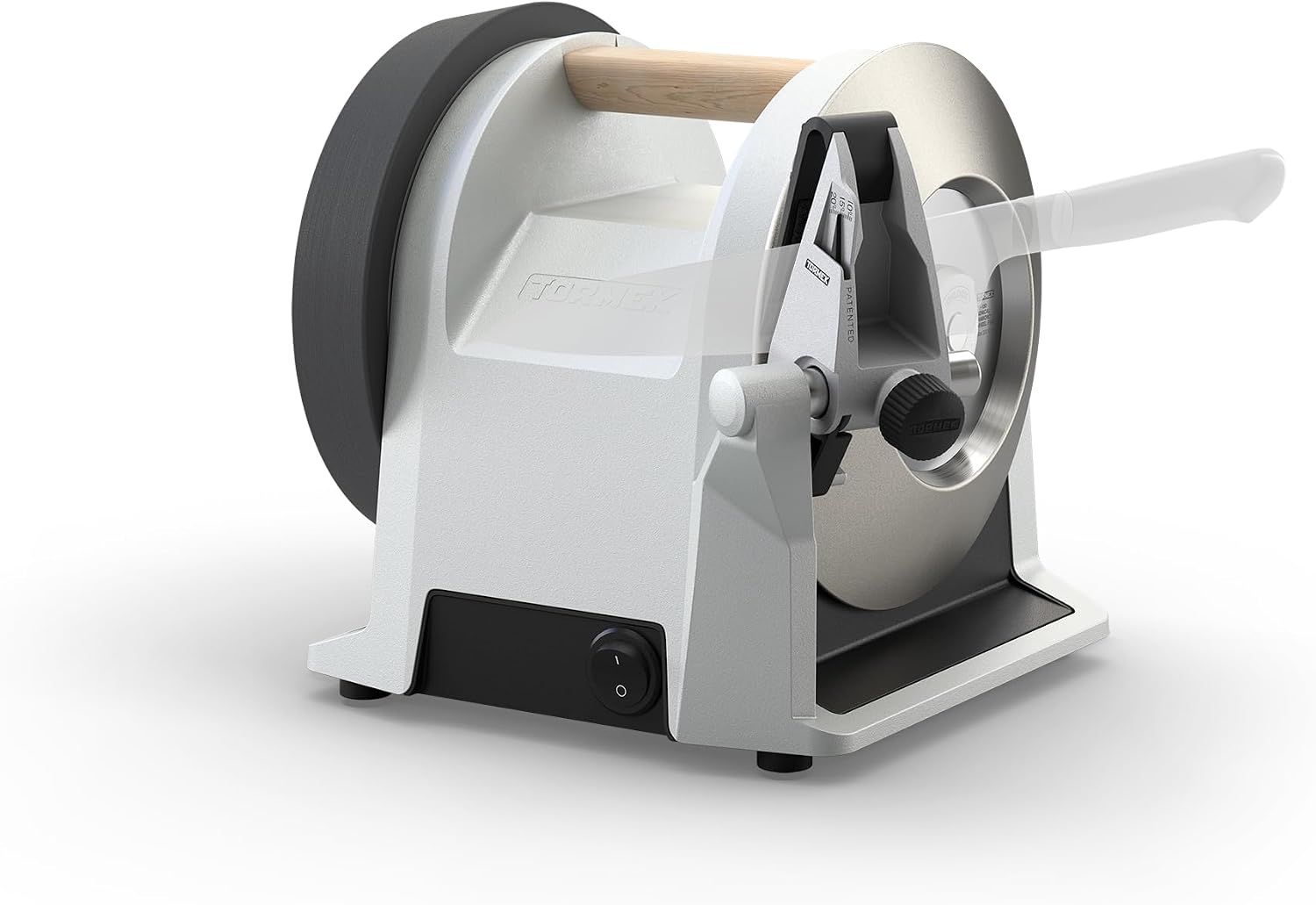
Best for: Serious home cooks who want professional-style sharpening at home.
Why we like it: Excellent build quality, controlled sharpening, and a separate honing stage.
Keep in mind: It is considerably more expensive than a basic kitchen sharpener. If you only sharpen your knives a few times a year, the price may be difficult to justify.
Sharp Pebble Premium 1000/6000 Whetstone
If you want to learn how to sharpen your knives with a whetstone, the Sharp Pebble Premium 1000/6000 Whetstone is a good place to start. It gives you two useful grits in one stone: 1000 grit for sharpening a dull kitchen knife and 6000 grit for refining the edge afterward.
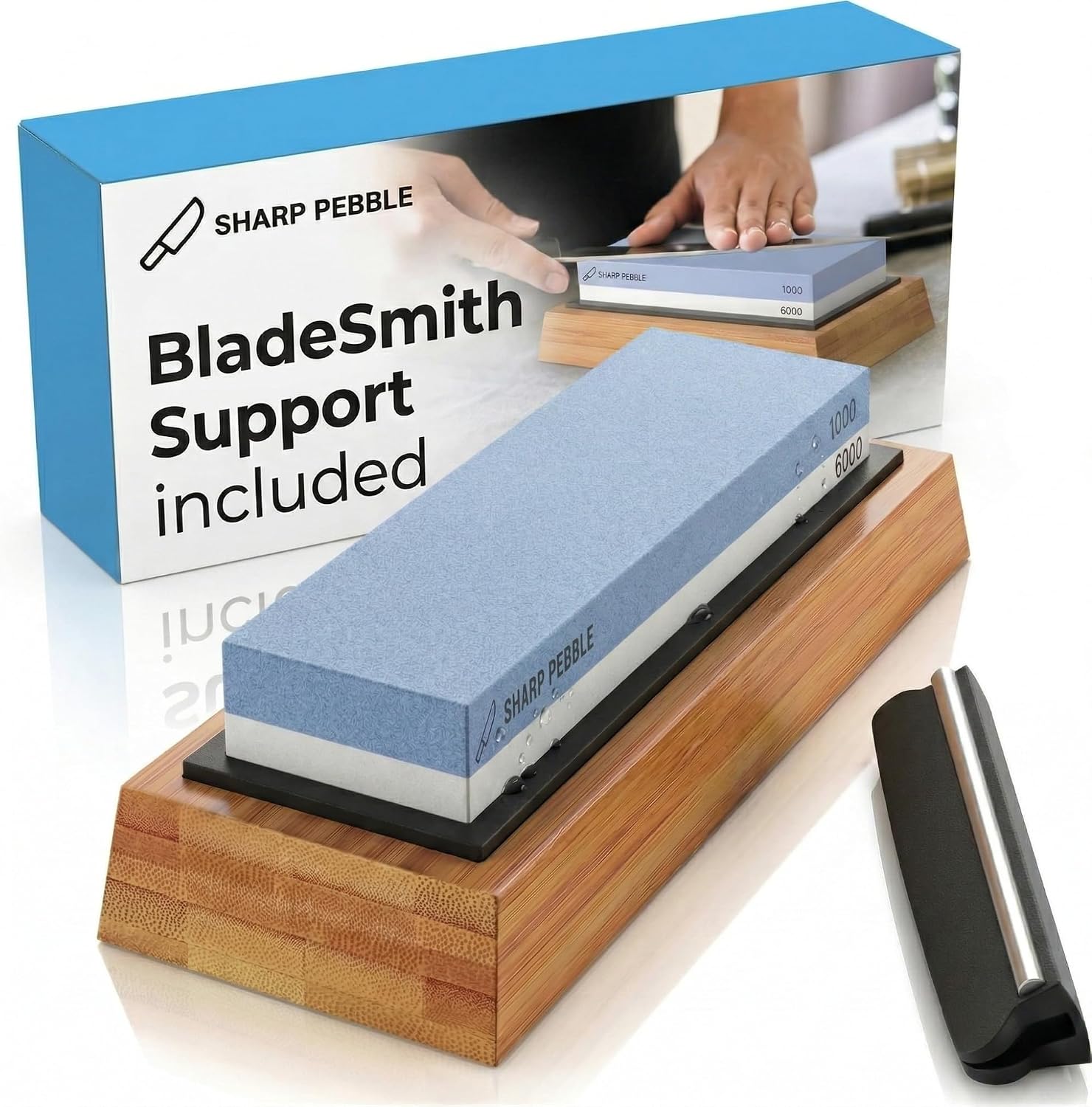
Best for: Beginners who want to learn whetstone sharpening without buying several separate stones.
Why we like it: Two useful grits, a beginner-friendly setup, and good value for someone learning freehand sharpening.
Keep in mind: A whetstone takes practice. The angle guide can help when you are starting out, but you should still learn to control the blade yourself rather than depending on the guide forever.
Don’t Forget the Sharpening Angle
The sharpening angle is one of the most important parts of maintaining a knife.
Different knives can have different edge designs, so there is no universal angle that works perfectly for every blade. Many kitchen knives are sharpened somewhere around the 15-20 degree range per side, but the manufacturer’s recommendations should take priority when available.
A thinner edge can provide excellent cutting performance, but it may also be more delicate. A slightly more robust edge can be better suited to knives that experience heavier use.
At Knife Spine, we recommend thinking about how the knife is actually used. A delicate slicing knife and a general-purpose kitchen knife do not necessarily need the same edge treatment.
If you are using a guided sharpener, the preset or adjustable angle makes this easier. With a whetstone, you need to develop the ability to maintain your chosen angle consistently.
How We Choose Sharpeners at Knife Spine
At Knife Spine, we do not believe the most expensive kitchen knife sharpener is automatically among the best kitchen knife sharpeners.
When assessing sharpening equipment, we focus on practical questions. Is it easy to use? Does it provide a consistent edge? Does it remove a reasonable amount of material? Is it suitable for the type of knife being sharpened? And, most importantly, can an ordinary knife owner realistically use it correctly?
We also pay attention to the learning curve.
A whetstone may offer excellent control, but a beginner may get better results from a guided system while developing their sharpening skills. Likewise, a professional cook who already understands edge geometry may find a basic pull-through sharpener too limiting.
This is why our recommendations are based on our experiences with the tools, not simply the product’s price or number of features.