
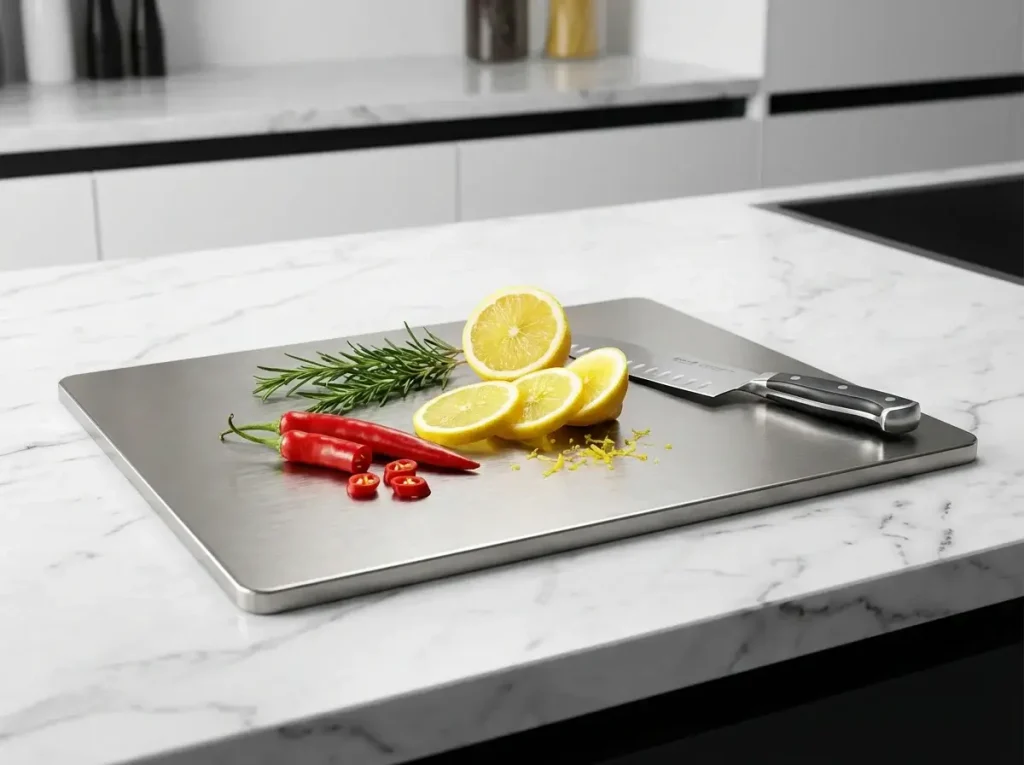
If you have recently switched to a titanium cutting board, you may be wondering whether your favorite kitchen knife is still safe to use. Titanium cutting boards are marketed as durable, hygienic, easy to clean, and resistant to scratches and stains. People usually wonder which are the best knives for Titanium cutting boards. In this review, am going share my recommendations as a cutler and knifemaker.
There is one important question every knife owner should ask: Do titanium cutting boards dull knives? The short answer is yes, they can. Titanium is a hard, durable material, and it does not have the forgiving surface found on traditional wood or plastic cutting boards. While a titanium cutting board may last for years, repeated cutting on a hard metal surface can put more stress on a knife’s edge.
That does not mean you cannot use knives on titanium. It simply means you should choose the right type of knife and understand the trade-offs.
In this guide, we look at the best knives for titanium cutting boards, which knives to avoid, and the main titanium cutting board pros and cons for home cooks.
Do Titanium Cutting Boards Dull Knives?
Yes, titanium cutting boards can dull knives faster than softer cutting surfaces.
A knife edge is extremely thin. When you cut on wood or a quality plastic board, the material beneath the knife provides some flexibility. The edge can slightly bite into the surface without receiving as much impact.
Titanium is different. The surface is hard and rigid. Every time the knife hits the board, the edge experiences more impact. Over time, this can cause the edge to become dull, roll over, or develop tiny chips.
The effect depends on several factors:
- The hardness of your knife
- The thickness and geometry of the knife edge
- The hardness and construction of the titanium board
- How aggressively you cut
- Whether you chop straight down or rock the blade
- How frequently you sharpen your knife
A soft stainless-steel chef’s knife may tolerate a titanium board better than an expensive Japanese knife with a very hard, thin edge.
However, even a durable knife will eventually lose its sharpness when repeatedly used on a very hard surface.
Best Knives for Titanium Cutting Boards
If you are committed to using a titanium cutting board, look for knives that prioritize toughness and durability rather than an extremely thin, delicate edge.
Here are some of the best types of knives for Titanium cutting boards to consider.
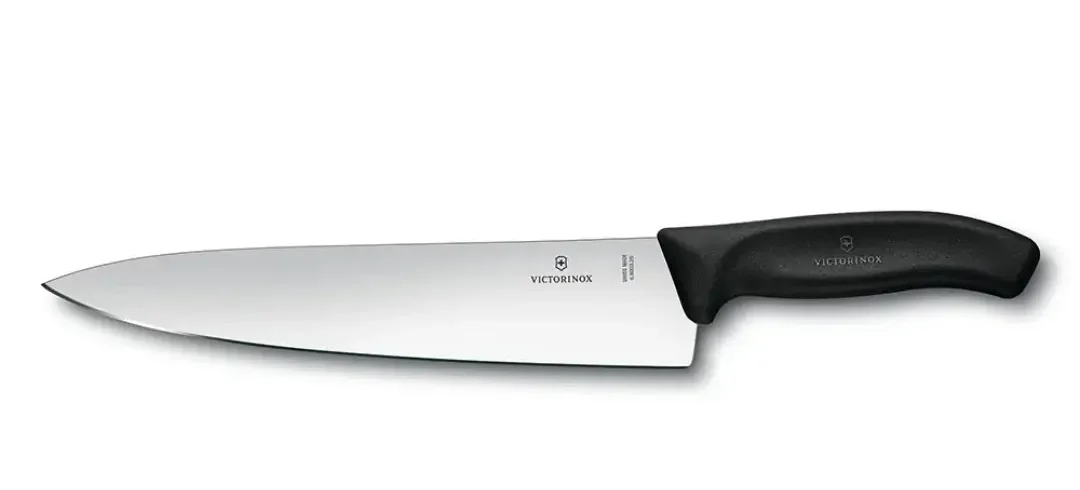
1. Victorinox Fibrox Chef’s Knife
For most home cooks, a Victorinox Fibrox chef’s knife is one of the best knives for titanium cutting board.
Victorinox knives are affordable, practical, and designed for everyday kitchen use. The stainless steel is relatively tough and the blade geometry is not as delicate as many premium Japanese knives.
The biggest advantage is price.
If repeated use on a titanium board means you need to sharpen the knife more often, replacing or maintaining an affordable Victorinox is much less painful than doing the same with a $200 or $300 specialty knife.
A 8-inch or 10-inch chef’s knife is a good general-purpose option.
Best for: Everyday cooking, vegetables, meat, and general kitchen preparation.
2. Mercer Culinary Chef’s Knife
Mercer Culinary makes several affordable professional-style kitchen knives that are suitable for people who want a durable workhorse.
The Mercer Renaissance and Mercer Millennia lines are popular among home cooks, culinary students, and professional kitchens.
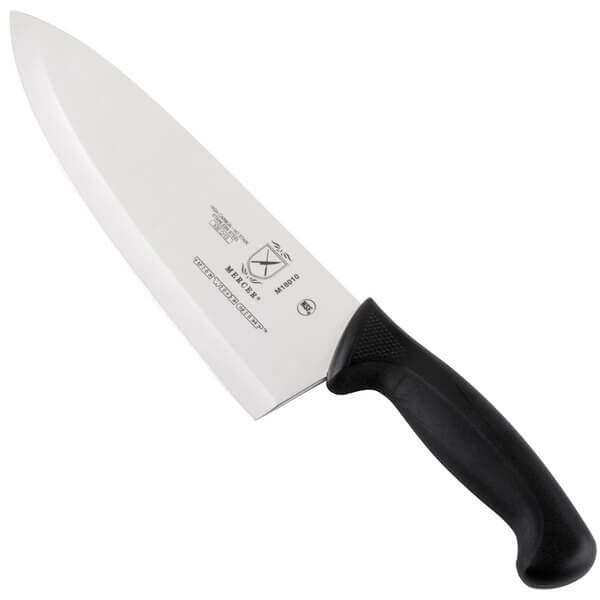
Their relatively robust construction makes them a better choice for hard cutting surfaces than extremely thin, high-hardness Japanese blades.
They are also inexpensive enough that you don’t have to treat them like museum pieces.
Best for: Budget-conscious cooks who want a durable everyday knife.
3. Wüsthof Classic Chef’s Knife
If you want something more premium, a Wüsthof Classic chef’s knife can be a good option.
Wüsthof’s forged knives are known for their durability and balanced construction. They are designed as practical kitchen tools rather than ultra-thin precision blades.
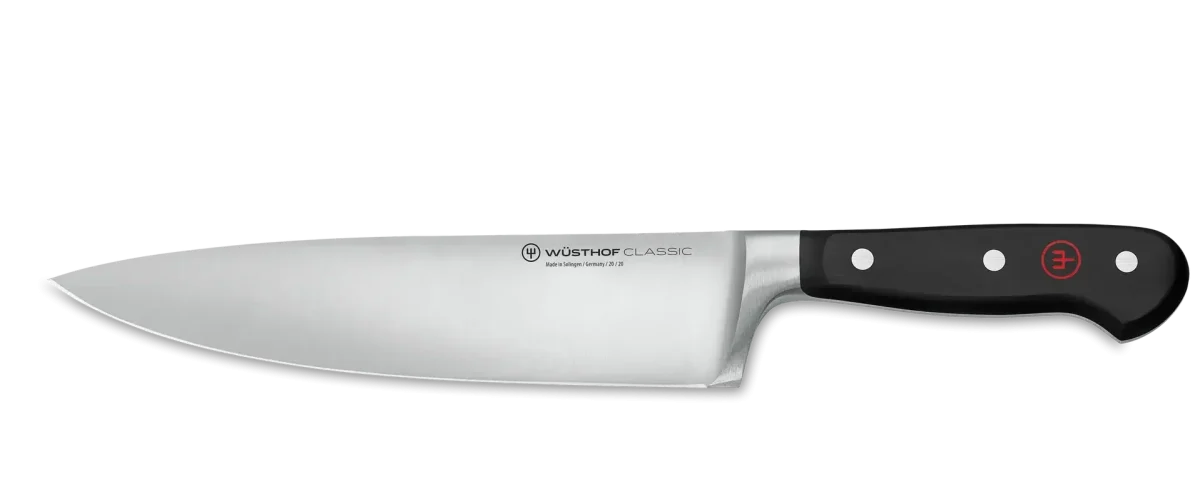
That said, a Wüsthof is still better treated carefully. A titanium board can shorten the useful life of any knife edge, so don’t assume that a premium knife is immune to dulling.
If you already own a Wüsthof, you can use it on a titanium board, but expect to sharpen it more frequently than you would on wood or a softer plastic board.
Best for: Cooks who want a premium, durable Western-style chef’s knife.
4. Dexter-Russell Kitchen Knives
Dexter-Russell knives are another practical option, particularly for people who prioritize durability and easy maintenance.
Many Dexter-Russell knives are designed for professional food preparation environments where knives are used frequently and need to be maintained regularly.
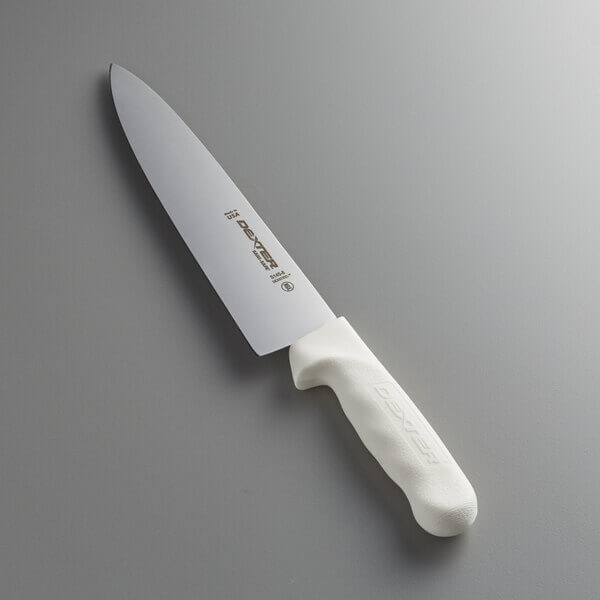
They may not have the refined edge retention of a premium Japanese knife, but their practical design makes them suitable for demanding kitchen work.
Best for: Heavy everyday use and cooks who prioritize toughness over extreme sharpness.
5. Thick-Edged Stainless Steel Knives
You don’t necessarily need a particular brand.
When shopping for a knife for a titanium cutting board, look for a tough stainless-steel blade with a moderately thick edge.
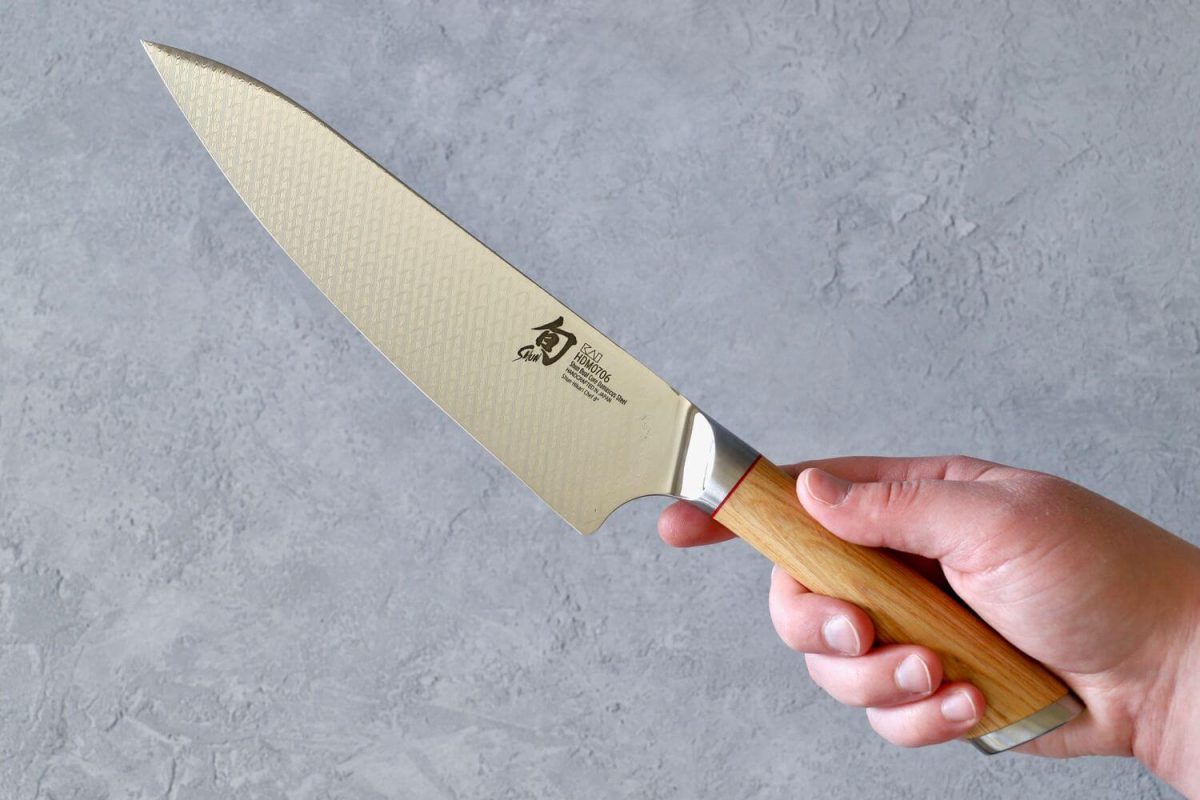
This type of knife is generally a better match for a hard cutting board than an extremely thin blade.
A knife that is slightly thicker and more durable may not feel quite as razor-like as a delicate Japanese gyuto, but it can handle everyday kitchen abuse better.
What Knives Should You Avoid?
The biggest mistake is using an expensive, thin, hard Japanese knife on a titanium cutting board.
High-end Japanese knives are often made from hard steels designed to hold a very sharp edge for a long time. Some have extremely thin edges designed for precision cutting.
Those characteristics are excellent on a suitable cutting board.
They are not necessarily ideal on titanium.
Avoid extremely thin Japanese blades
Knives such as delicate gyutos, petty knives, and other thin Japanese blades can be more vulnerable to edge damage.
Their thin geometry is designed for precise cutting, not repeatedly striking a hard metal surface.
Avoid expensive high-hardness knives
If your knife is expensive and difficult to sharpen, using it on titanium may not make much sense.
A premium knife deserves a board that protects its edge.
Avoid using your best knife for heavy chopping
Even if your knife can technically handle the board, aggressive chopping increases impact on the edge.
If you are cutting through hard vegetables, bones, frozen food, or other difficult ingredients, a titanium board is particularly unforgiving.
Titanium Cutting Board Pros and Cons
Before buying one, it is worth looking at the complete picture.
Titanium Cutting Board Pros
Very durable: Titanium is strong and resistant to many forms of everyday wear.
Easy to clean: A non-porous metal surface is simple to wash and does not absorb food juices in the same way as wood.
Resistant to stains and odors: Unlike some plastic and wooden boards, titanium does not easily absorb food smells or discoloration.
Does not absorb moisture: This can be useful when preparing foods such as raw meat.
Long service life: A quality titanium board can potentially last much longer than inexpensive plastic boards.
Lightweight compared with some other metals: Titanium has a high strength-to-weight ratio, which makes it attractive for cutting-board construction.
Titanium Cutting Board Cons
Can dull knives: This is the biggest disadvantage for serious cooks.
Hard cutting surface: The rigid surface provides little cushioning for the knife edge.
Can be noisy: Cutting directly on metal can produce more noise than working on wood or plastic.
Less pleasant cutting experience: Many cooks prefer the feel of a wooden board because it provides a softer and more natural cutting surface.
May show knife marks: Although titanium is highly durable, repeated cutting can still leave visible marks depending on the finish and construction.
Not ideal for premium knives: If protecting knife sharpness is your priority, there are better cutting-board materials.
Titanium Cutting Board Dull Knives Review: What Should You Expect?
So, does a titanium cutting board instantly ruin a knife?
No.
The bigger issue is long-term edge wear.
You may not notice a major difference after preparing one meal. However, if you use the same knife on titanium every day for months, you may notice that the knife does not stay sharp as long as it did when used on wood or plastic.
The knife may also develop a rolled edge. In more extreme cases, a thin or brittle blade can develop small chips.
This is why reviews of titanium cutting boards often have very different opinions.
Someone using an inexpensive Western chef’s knife may have no major complaints. Another person using a high-end Japanese knife may strongly dislike the same board.
Both experiences can be valid.
The board and knife need to be considered together.
How to Reduce Knife Dulling on a Titanium Board
If you already own a titanium cutting board, there are several things you can do to reduce edge damage.
Use a durable everyday knife
Keep your most expensive and delicate knives away from the titanium board.
Use a durable stainless-steel chef’s knife instead.
Don’t chop aggressively
Use controlled cutting motions rather than repeatedly slamming the knife into the board.
Avoid bones
Do not use your kitchen knife to chop through bones on any cutting board. Use a proper cleaver or bone saw when necessary.
Keep the knife sharp
A properly maintained knife requires less force and is safer to use.
However, avoid aggressively sharpening the knife every time it feels slightly less sharp. Learn to distinguish between a dull edge and a rolled edge that may respond to proper honing.
Consider using two cutting boards
This is arguably the best solution.
Use the titanium board when hygiene, easy cleaning, or durability is important. Use a quality wood or plastic board when you want to protect your best knives.
That gives you the benefits of both systems.
What Is the Best Knife for a Titanium Cutting Board?
For most people, the best choice is not the most expensive knife.
A durable 8-inch stainless-steel chef’s knife with a moderately robust edge is the ideal starting point.
The Victorinox Fibrox is an excellent value option, while Mercer Culinary and Dexter-Russell offer other practical choices. If you prefer a premium Western-style knife, a Wüsthof Classic can work, although you should still expect more edge wear than you would get on a softer cutting surface.
The important thing is to avoid pairing an extremely thin, expensive, high-hardness knife with a hard titanium board.
Final Verdict
Titanium cutting boards have some impressive advantages. They are durable, easy to clean, resistant to moisture, and designed to withstand years of kitchen use.
But knife friendliness is not their strongest feature.
If you are asking, “Do titanium cutting boards dull knives?”, the answer is yes. They can accelerate edge wear compared with softer cutting surfaces.
For that reason, the best knives for titanium cutting board are affordable, durable stainless-steel knives designed for everyday work. Victorinox, Mercer Culinary, Dexter-Russell, and robust Western-style knives are better choices than thin, delicate Japanese blades.
If protecting your knife’s edge is your number-one priority, however, a quality wood or plastic cutting board remains the better option.
Think of it this way: a titanium board is built to protect the board, while a good wooden cutting board is built to protect the knife.
For the best results, use the titanium board when its durability and easy cleaning are useful, and keep a softer cutting board available for your favorite knives.